
Start with the available space
Measure your ceiling height, note nearby doors and cabinets, and think about how people move beneath the light. A fixture above furniture has different practical considerations from one in an open walkway. Ask an installer to confirm the clearances that apply to your room.
Explore pendants for a suspended accent
A pendant draws the eye downward from the ceiling and can define a specific place: an island, table, or corner. A cluster gives another way to create rhythm. Check the complete drop and mounting details, rather than judging scale from a product photograph alone.
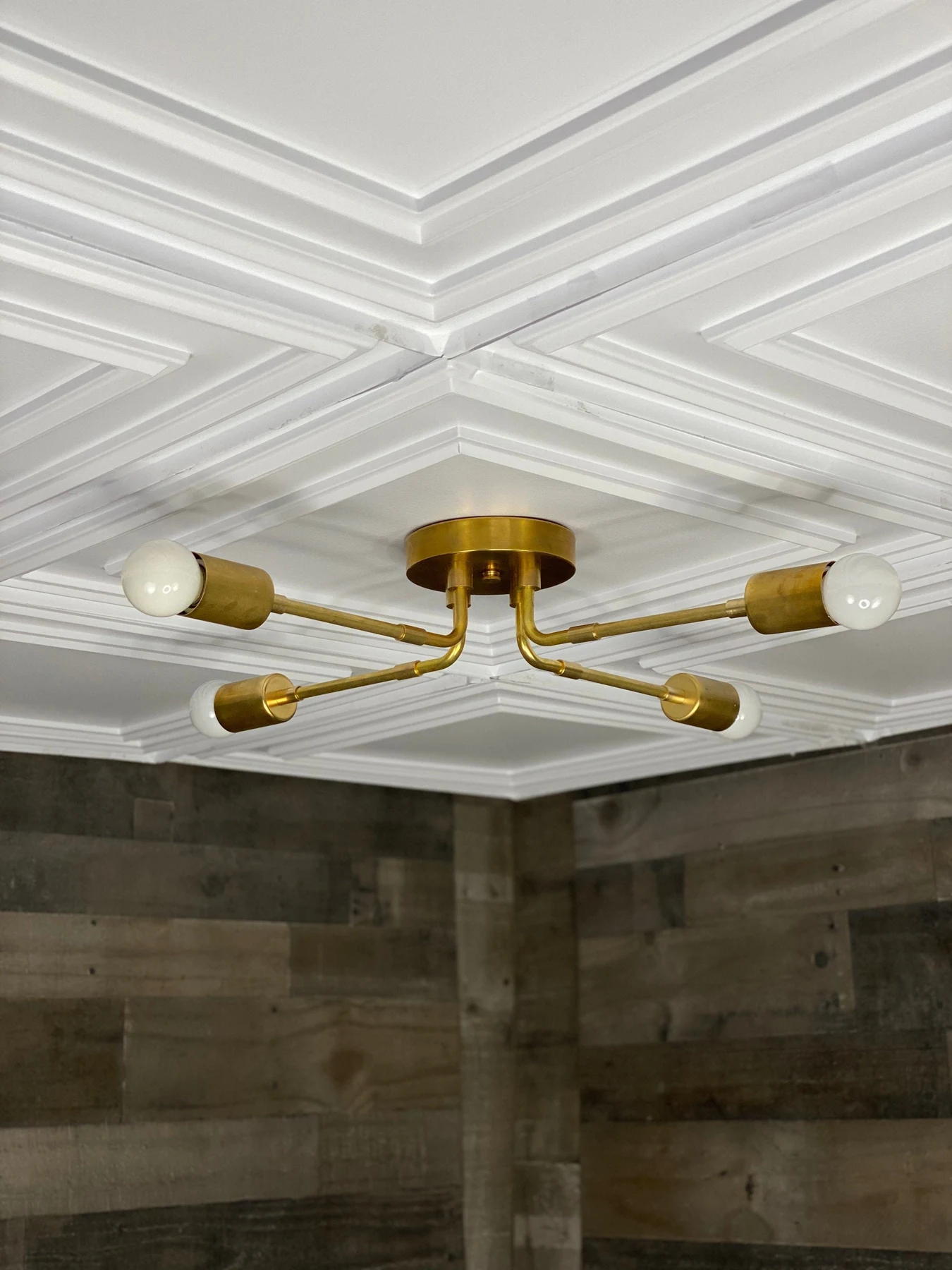
Explore semi-flush forms for a closer profile
Semi-flush designs keep the visual focus nearer the ceiling. That can be a useful starting point when a long hanging fixture would not suit the room. Compact does not have to mean plain: branching arms, globes, and geometric forms can still make a strong statement.
Think about the room beyond one fixture
Consider what the room needs at different times of day. A ceiling fixture can be part of a wider arrangement with wall lights or a table lamp. Choose the shapes as a family while allowing each one to have a purpose.
Confirm the complete specification
Before ordering, review dimensions, mounting, required bulbs, location rating, and current lead time. Ask about a sloped ceiling or a special drop before adding modifications. Use the project brief to collect your measurements and questions in one place.